For L'Officiel Hommes, Andrii Siguntsov spoke with Matthias Geerts about his career at the intersection of fashion and music, the new architecture of influence, his experience working with leading brands, and his decision to travel to Ukraine for the first time to perform at VESELKA.
This will be your first time in Kyiv. What was your first reaction when you were invited to perform?
Yes, this will be my first time in Kyiv. When I was invited, I was happy and grateful. I felt special because I was the one invited to come and play in this very special queer space that has existed in Kyiv for eight years. For me, it is a great honour: to enter this space, to become part of it, to feel its energy. As a queer DJ, it is important for me to have the opportunity to come to Kyiv and give something back to the queer community in a creative way.
Many international artists are still hesitant to travel to Ukraine because of the war. What made you say yes?
At first, I immediately thought: yes, I want to do this. For me, it is about stepping out of my comfort zone and adding something to an energy that has been built there for years. But it is not so much about 'giving' a musical experience. It is more an experience for me: to see, to feel, to be there. I have always preferred playing for queer audiences because they dance harder and express themselves better. Queer dance floors are what give me inspiration, because people are more themselves there. I cannot imagine what it means to live in a country where a war is taking place, but I can imagine how strongly people need a normal life. And a party, especially within the queer scene, is a very important part of that: the possibility to express yourself, release tension, turn off the outside world for a few hours and be in the moment.
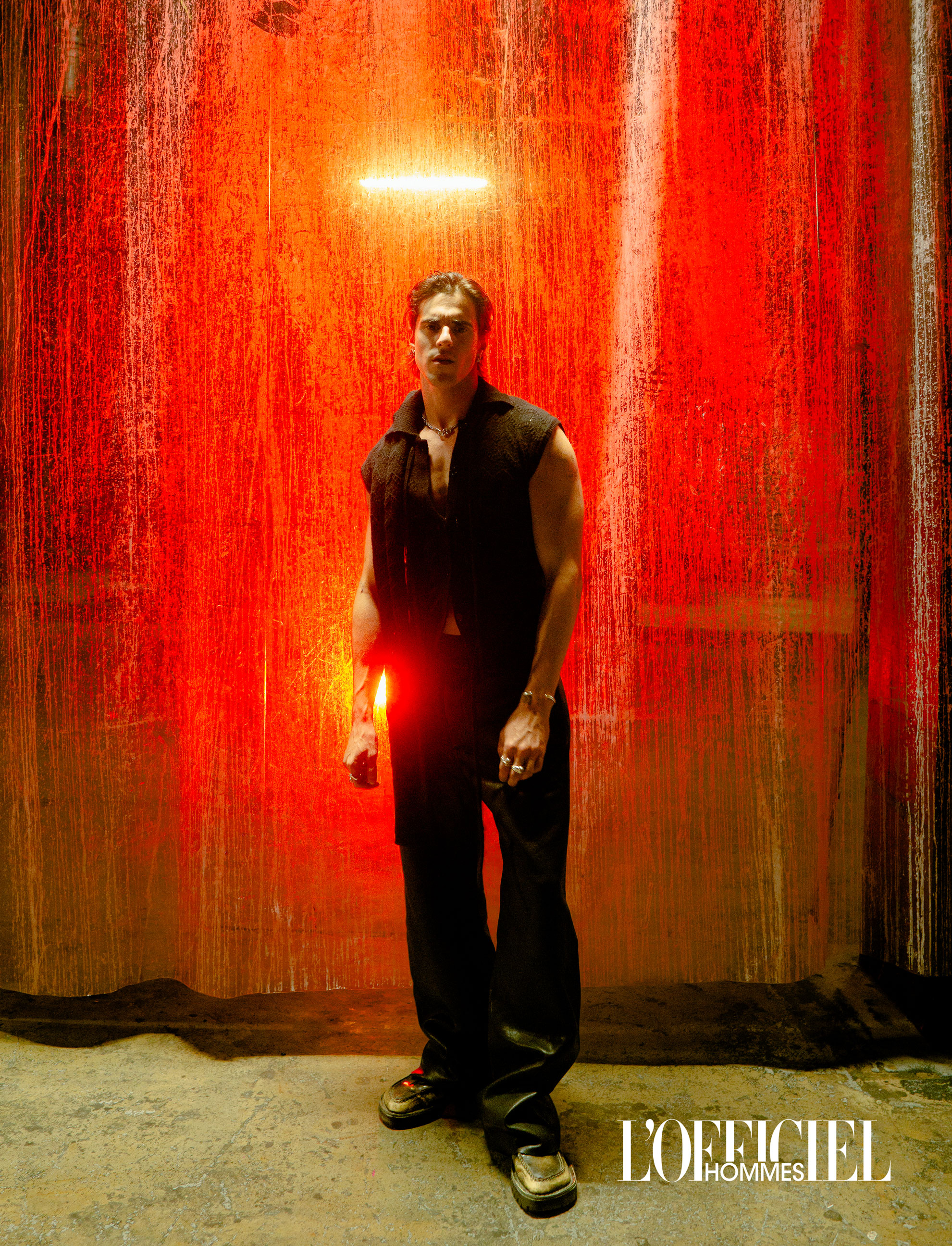
Top and trousers: ALAINPAUL. Shoes: CAMPERLAB. Jewelry: TANT D’AVENIR.
For you, is this trip more about performing, showing support, discovering the Ukrainian scene, or all of these things at once?
It is all of these things at once, but probably, for me, it is mostly about discovering the scene and showing support. Of course, I love performing, but here the experience itself is more important. I am interested in learning something, in seeing how it exists in a more underground context. For me, the focus is exactly that: to discover the scene and show my support.
Many people support Ukraine on social media, but an Instagram post and physical presence are not the same thing. What does solidarity mean to you?
For me, solidarity means actually showing up and being present. Yes, I can post about it, and my public visibility allows me to show this experience to different people, including people beyond a queer audience. But being there physically means much more. That is the main message I want to convey: to show my solidarity with Ukraine through presence and through giving something back to the community.
VESELKA is not only a rave, but an important queer space. How do you understand the role of queer life today?
I always say: before something becomes a trend in the mainstream, it already exists inside the queer scene. Sound, style, ways of expressing yourself often begin there and then move into the mainstream. I worked in fashion for ten years and saw this many times: what first looks cool inside the queer community later becomes cool for everyone. That is why it is important to value and protect queer people who know how to express themselves. Club life plays a huge role in this because it is a safe space where everyone can be themselves and feel part of a community.
Do queer spaces become especially important during crisis and war?
Yes, they are very important. Especially for young people, because they need safe spaces in order to understand and develop themselves. When you are young, it is very difficult to figure out who you are. If there is a community of people around you who are themselves and freely express themselves, you can see: 'I can be like that too. This is normal.' Without such spaces, we would not have the queer presence and the queer revolution that exist today.
In Kyiv, because of the war and the curfew, nightlife cannot exist in its usual form, so parties take place during the day. Does this change anything in your performance?
No. I think it is very important that things like this continue to exist. What VESELKA has created by continuing to organise parties during the war is a kind of light in dark times. I spoke with Stas, the organiser of VESELKA, about the music I should play. At first, I thought: this is a daytime party, maybe I should play more house. And he said: no, do what you usually do. People will perceive it as a night party because there is a curfew, they are ready, they want this experience. So I will play trance, techno, what I usually play. Of course, it will feel different, but I want to give them a night-time experience.
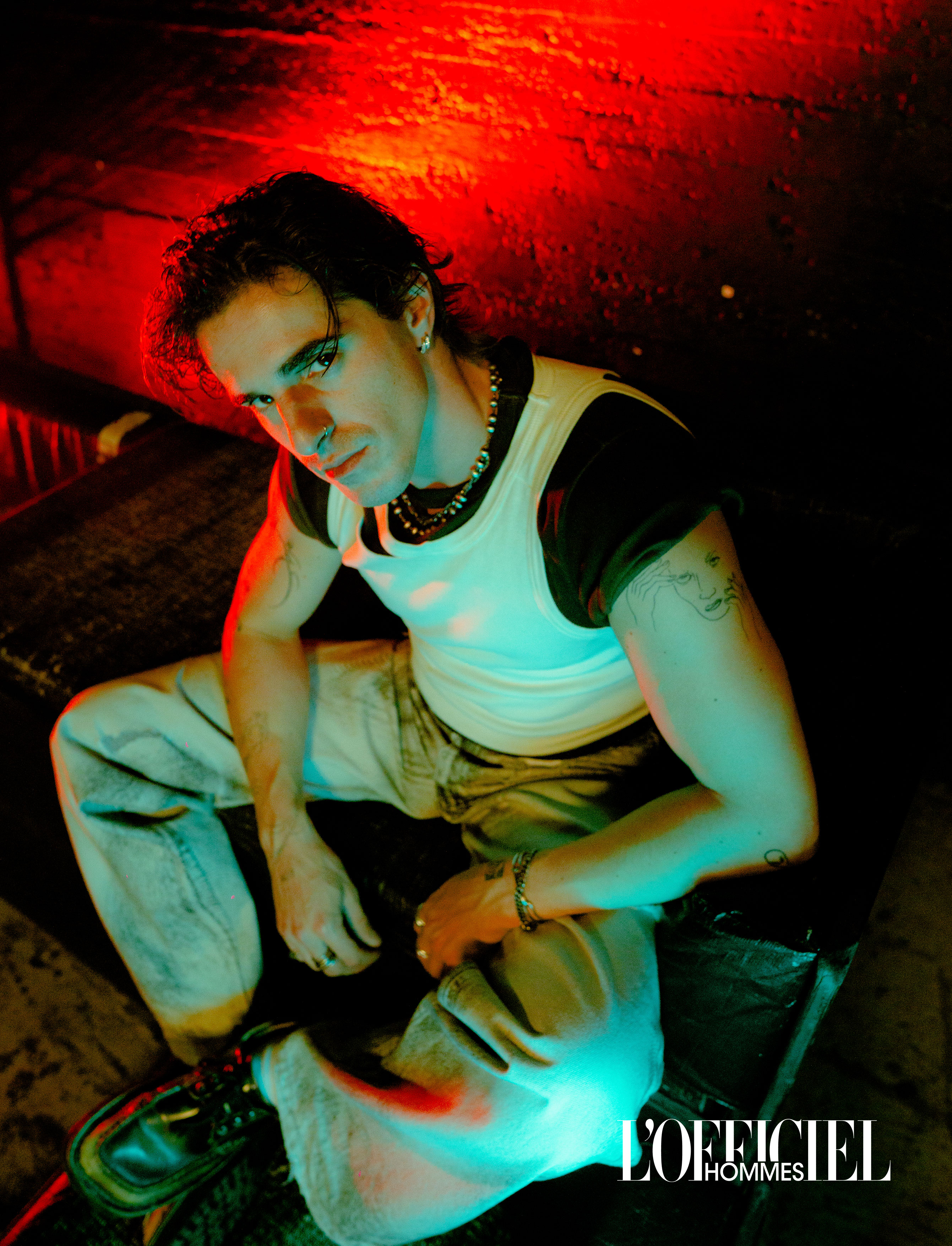
Full look: CAMPERLAB. Jewelry: Werkstattünchen.
Your work exists between fashion, music, nightlife and personal style. Do you see yourself more as a DJ, a cultural figure, a storyteller, or someone between these categories?
I increasingly see myself as a DJ. But because I have worked in fashion longer than I have been DJing, I also see myself as a storyteller. I do many different things: I speak about important topics, show my everyday life, go to events, work with brands, do shoots, create and play music. At one point, I lost a little bit of creativity in fashion because I am not a designer. I worked in content, and when you create content every day for a long time, at some point it becomes not enough. That is why I started DJing, and later producing. When I play music, when I build a set, when I build a story, it gives me much more joy. So I am more of a storyteller who mixes these things in order to be myself.
Today influence is no longer built through a single profession. It emerges through images, sound, taste and community. How do you move within this architecture of influence?
Honestly, I just live day by day. There are days when I work as a content creator, days when I work as a DJ, days when I produce music. For me, it feels so natural that I do not feel as if I am 'moving' between these roles. One day I do one thing, another day I do something else. I try to make my content feel close to people: to speak to my followers the way I would speak to my friends. Before, I wanted everything to look very polished and cool, but when I started being more alive and direct, I received more reactions and feedback from people. So I simply post what I feel, or express my opinion in a natural and understandable way. There are no real rules.
What did music give you that fashion could not?
The creative part. In music, the possibilities seem endless. I have always loved techno, trance, going out, dancing. DJing gave me back a sense of creative purpose. It was something more conscious and physical, something I do with my hands. Working for fashion brands had become a little automatic for me because I had been doing it for too long. But I have been DJing for six years now, and every time I play, it feels new again: I can always do something differently.
Is there a connection between the way you dress and the way you play?
Yes, I think there is. Lately my style has been more grungy and dark, but I still love light colours. When I DJ, my look is more underground and relaxed. When I work with brands like Dior, it becomes a more refined story. I like moving between these states, but there is still a common line: colours, silhouettes, a feeling. In a club, I might wear an oversized T-shirt and good denim, while for a fashion show I would wear something more fashion-forward. But now I put less effort into my outfits than I used to, because I think: I am here to play music, I need to move, I need to feel comfortable.
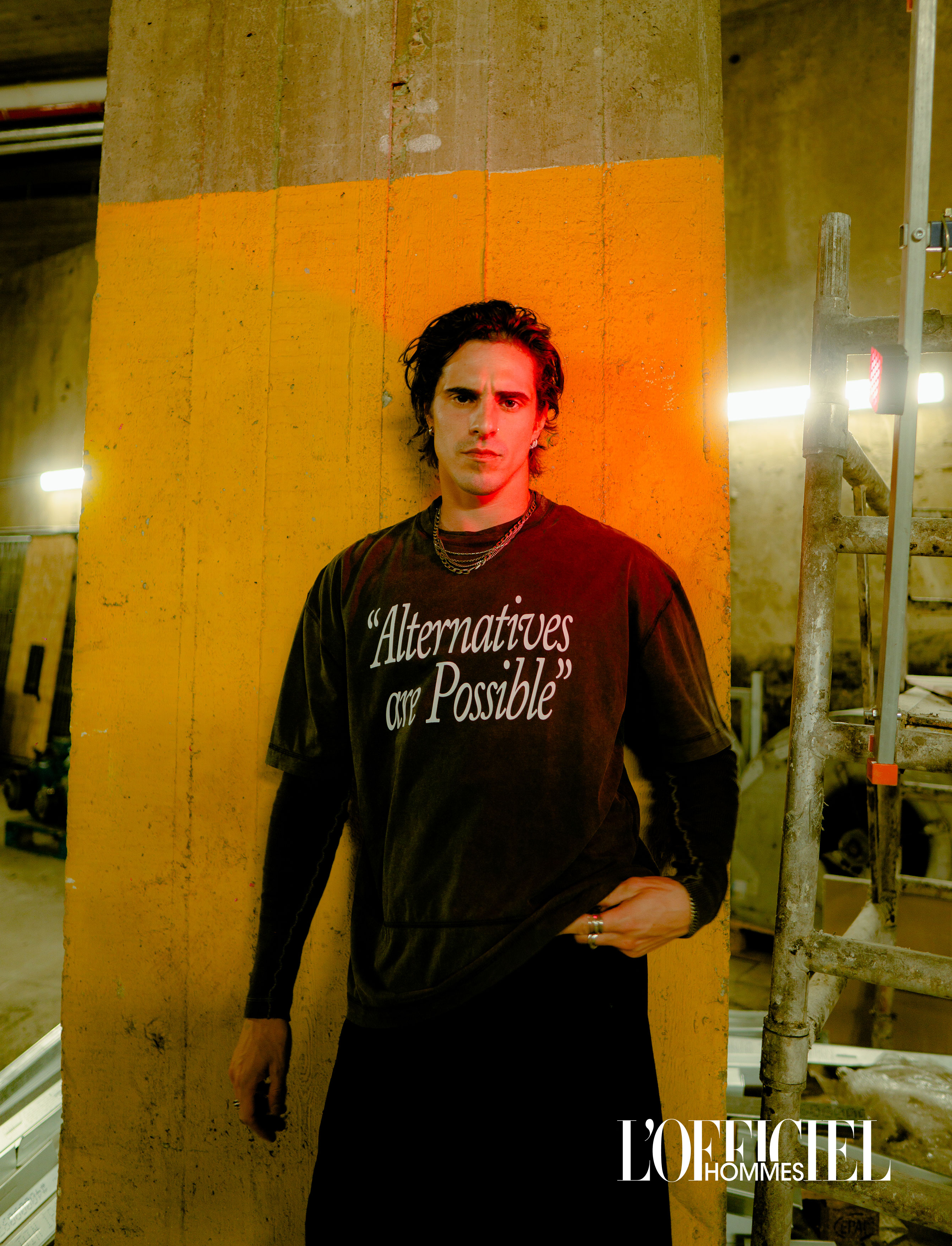
Full look: Études Studio. Jewelry: Werkstatt.
How different is it to play for luxury fashion events and for a queer audience?
They are very different things. I like playing for brands because it is a good platform and an opportunity to let people hear interesting music at certain events. But the people invited to those events usually do not come to listen to you. You are more like part of the space, part of the interior. That is normal; it is also part of the work. But playing for a real audience is a completely different pleasure. People come to have fun, discover new music, get lost in time. At a cocktail event, people do not come to get lost in time. They come for an hour or two. Of course, I feel closer to playing for an audience that truly wants to be inside the music. But I am also grateful to the brands that invite me: it is a platform and a way to build relationships with people who otherwise might never hear my set.
Your public image is very visible, but visibility can also become pressure. How do you protect your private self?
I do not think I really protect it. I am very online, but when I am not online, I am not online. If I go to a party in Brussels, I try to switch that off, and people there respect it. They come to have fun, and so do I. At fashion events or shows, I understand that I am more of a public figure, and people may want to interact with me. But when I go somewhere as a raver, I try to be in the moment, be on my phone less and be online less. It is difficult, because the very thing that makes me more human works better on social media. The more I show my real self, the more people relate to it. But at the same time, you lose a bit of privacy. I am used to it and I do not see it as a big problem. It is not like I am Miley Cyrus. Honestly, it is fine.
From the outside, Ukraine is often seen through the prism of war. Why go to a rave in a country where a war is taking place?
Because it is resistance. It is more real. The energy of a rave in a country where a war is taking place is inspiring: people still make the effort to make it happen. That should be celebrated, because it takes a lot of effort, strength and inner power to organise events like this in difficult times. It is done for people, so that they can have a sense of normal life, be present and, at least for a while, not think about the situation they have been living in for years. I do not think there is anything more powerful than a rave in a country where a war is taking place. In Belgium, things can also be good, but it no longer has the same intention. In Kyiv, it seems to go to a deeper level. That is why I want to go.
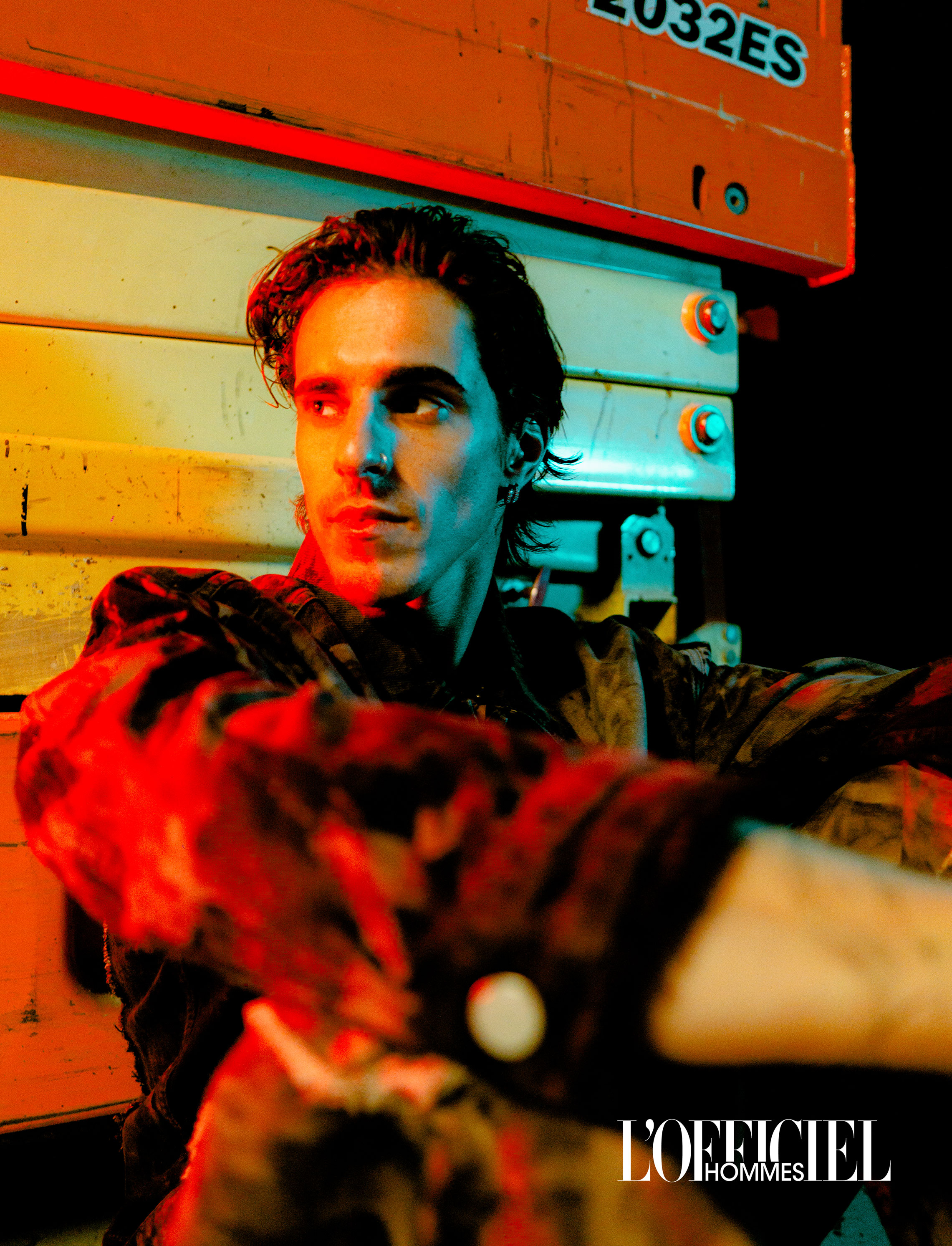
Full look: Études Studio. Jewelry: Werkstatt.
Can pleasure, beauty and dance be forms of resistance?
Absolutely. That is exactly how techno and house became what they are today. In times of resistance, people gathered together, threw parties and showed their resistance by doing what they wanted to do. It was a message: 'Look, we are here, we exist, and we are important.' War is a very strange concept because civilians who do not want to be involved are pulled into it. That is why it is good when people show resistance through dance, beauty, pleasure and presence.
What did Antwerp give you as a person and as an artist?
Antwerp taught me so much. I lived there for ten years, during very defining years, roughly from 18 to 30. There I discovered going out, nightlife, and all my friends are there. It shaped me as a person and it shaped the sound I like: Belgian new beat, the techno sound that comes from Belgium. I like to reference DJs from the 90’s and 00s, such as CJ Bolland, Yves Deruyter, Cherry Moon label is the trance sound that I find beautiful. Antwerp is a very creative city, and when you are surrounded by creative people, it automatically makes you more creative. At the same time, Antwerp is small, and that keeps you grounded. Belgians in general are quite restrained and modest. I think that is important: to remain grounded while also experimenting. Because if you do not experiment, you do not create anything new.
Why did you choose Paris now?
At some point, Antwerp became a little boring for me. It is a very creative city, but it is small. After ten years, you know everyone. I wanted new impulses. Paris is a global city, and especially after Brexit it is becoming very important in Europe. I wanted to live in a bigger city while still being close to home: Antwerp is only two hours away by train. I thought about London, but after Brexit, no. I thought about Milan, but also no. Paris was the most obvious choice. Besides, Antwerp and Paris have a lot in common. For me, Paris can be an extension of Antwerp: many Antwerp designers show their collections here or have their agencies and ateliers here.
What kind of freedom are you looking for at this moment in your life?
I want to be able to travel even more. I really love travelling, although it exhausts me. But at the same time, it feeds me creatively: meeting new people, new things, new experiences. Over the next five years, I want to meet as many people as possible, do new things, connect with people and build a community. I want to start my own parties: first in Antwerp, then in Brussels, and later in different cities, involving local artists. That is the freedom I am looking for: not being tied to one place, but being able to take my work with me and build a community that gathers in different cities.
What would you like to say to the Ukrainian community before your performance in Kyiv?
Thank you for letting me into your space and allowing me to feel the energy you have been building over the past years, even before the war. I am sorry I did not experience the Ukrainian queer and underground scene before the war, but I think it has become even stronger now. For a DJ, it is a special opportunity to be allowed into such a space. I feel that I will receive a lot of inspiration, that I will be able to take it home with me, cherish it and celebrate what Ukrainians have built over these years and continue to build.
What message would you like to convey to people outside Ukraine?
Ukraine is much more than war. People's lives continue there, and it is important to show this to the rest of the world. It is not just a war zone. Cultural events are happening, underground events are happening, people are running their businesses. Life goes on.